
Restaurant technology is advancing on a daily basis and one of those considered as one the backbone of this advancement is restaurant online ordering software. How can restaurant online ordering software serves as the backbone of restaurant technology? How can it help you to attain your business goals to your restaurants? What is an efficient way to utilize your restaurant online ordering software? These common questions will be answered as you continue in this blog post.
The anatomy of your restaurant online ordering software
The definition of restaurant online ordering software is a type of a software or program that allows restaurant businesses to accept and manage orders placed over the internet. Like our human body, your restaurant online ordering software has its own anatomy or body parts. Each part has specific functions that aid the whole body to become efficient and effective. Your restaurant online ordering software, in general, is composed of two main parts. First is a website or mobile app for hungry customers to view your restaurant’s cuisines and place an online order. Second is an admin management interface for your restaurants in order to receive and manage your customer’s orders. Let’s discuss each main part further one by one.
Website and mobile app your customer’s gateway to your restaurant
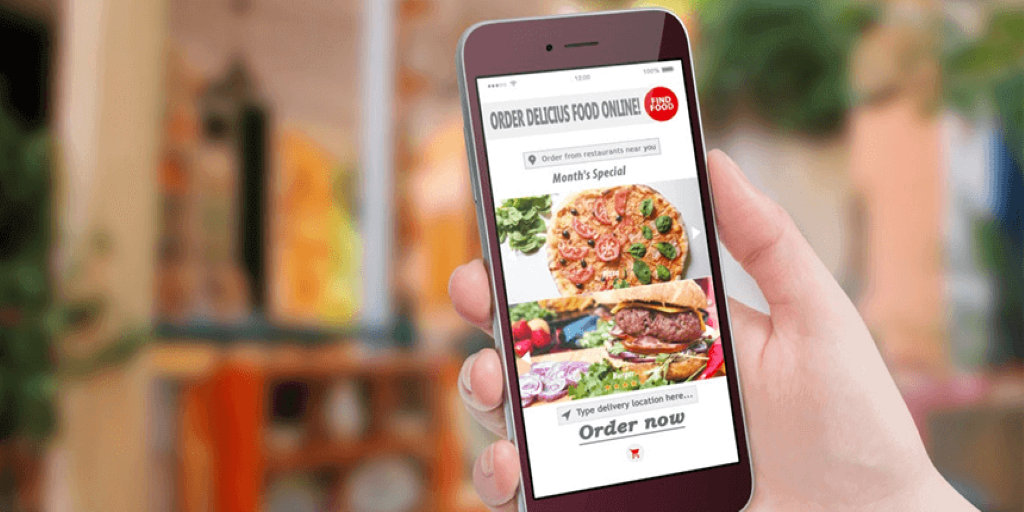
Your website or mobile app will serve as your initial interaction or gateway to your customers. It’s where they can view your menu and place their orders to your restaurant. The following are the general things that you need to observe in order to convert your customers to visit your website and mobile app into am order:
- Menu description should not be too technical
We understand the temptation to present your house menu as something that is palatable compared to your competitors and one of the techniques is your menu description. You want to include culinary terms in your description. However, be careful not all your customers are knowledgeable of the terms and can easily misunderstand them. Instead of placing their orders they might be overwhelmed by your menu description. To avoid this unfortunate event maintain a simple menu description instead of putting highly technical culinary terms. Say for example, instead of using the French culinary term Entrée you can use the word, main course in your menu description.
- Your menu pictures must be a copy of your actual menu
It’s equally tempting to present your menu pictures in all its details sometimes restaurants use a mock-up menu or a synthetic one to bring the menu details. However, using such methods has proven unsuccessful compared to using an actual picture of your menu. Likewise, copying from the menu of your competitors and editing it to suit your brand is not also advisable. These methods can result in customer complaints because your customers will compare your menu pictures over your actual food delivered to them. Nothing will still beat a picture of your actual menu you just need to determine the best angle to bring out your menu edges and taste.
- Faster loading time compared to competitors
Nothing can compare to the irritation a hungry customer will experience if your website and mobile app loading time are very slow. Consult with your developers and digital marketing team on the different ways to make your page load faster. You can adjust the sizes of your content, graphics and maximize available space in order to achieve faster loading time.
- User-friendly online ordering software protocols
Making your site and app user-friendly is another step in converting your customer visits into an order. You can do this by installing engaging and functional plugins to your site and app. It should direct the customers to the things they wanted to know about your menu, services, and location. It’s advisable also to put a chatbot in order to answer your customer queries.
Your admin management interface features for your business growth
Your admin management interface features of your restaurant online ordering software are intended for you to plan, control and modify your online ordering system to suit your current brand strategy and business goals. It’s important to identify a service provider that can help you with all of your requirements. Each restaurant is different from each other the heavy reliance on restaurant online ordering software among cloud kitchen models are different from full-stand-alone restaurants. A full-stand-alone restaurant incorporates ordering kiosks to its ordering technology to manage its dining guests. You should look into the following features to your admin management interface in order for you to maximize your restaurant online ordering software to your benefits:
- Menu management
This feature of your admin management interface allows you to modify and improve the way your menu is presented to your online ordering system. We all know that in restaurant operations not all the cuisines that we are offering to our customers will be saleable it still depends on our customer’s preference. The ability to modify and a flexible feature in your admin management interface are very important. You need to ensure that this is integrated into your online ordering software.
- Customer notifications
Another feature to look to your admin management interface is your customer notifications. This feature allows you to receive your customer orders and monitor them on your portal. This feature serves as your reminders for incoming orders to your restaurant.
- Order tracking
Your admin management interface should also have an order tracking feature which allows you to monitor the time you received the orders, the time it is dispatched to your kitchen up to the time it is delivered or fulfilled to your customers.
- Advanced business analytics
This feature is a must in your admin management interface so you should discuss it to your restaurant online ordering software service providers. It will help you set your own performance metrics to your online ordering system. You can put your performance metrics like your delivery hit rate, the volume of orders and delivery locations among other metrics. Another purpose of this feature is that it will allow you to have your in-depth analysis of your restaurant operations. It will identify what areas are you leading and needs improvement. It will serve also as an evaluation tool on the effectiveness and efficiency of your online ordering software.
- Easy ordering feature for your customers
As a general rule, you should ensure all your offerings to your customers are engaging and can get their attention this includes your online ordering system. This feature allows your customers to easily browse and click your menu for their order placement. The simpler, faster and easy to use an ordering feature the better for both of you and your customers.
- Loyalty and incentives program
Your customers wanted to be rewarded and receive gifts from you because of their loyalty and this feature takes care of that. You can put and modify your loyalty and incentives program to your online ordering software easily.
- Currency converter
If your operations involved overseas customers placing their orders for their relatives and friends to your location then this feature is helpful to you. This feature will allow you to convert the currency of your customers easily to your own local currency at the prevailing exchange rate. It will also help your customers know the exact amount they will be paying you for their orders.

Your online ordering software features is a partnership with your service provider
Putting all the needed features to your online ordering software is not only your task or that of your chosen service provider but it’s a partnership. You need to lend each other’s expertise, resources, and experience in order to discuss the features that you need and are applicable to your restaurant operations. Service providers like Taker are open to listen and implement to your online ordering system any features you want to be integrated, replaced or deleted. The key here is to be open with your service providers all throughout the cycle of your online ordering software.
What is the development cycle of your restaurant online ordering software?
You might be wondering how your online ordering software came to its existence. What are the steps or cycle your software developers and service providers followed to successfully run the program? What are your roles as the end-user in the software development cycle? In this part of our blog, we will discuss the development cycle of your restaurant online ordering software. Your service providers and software developers followed the software development life cycle (SDLC) when they designed, developed, and test your online ordering software before its deployment to your restaurant.
When the process of SDLC is followed correctly it produces quality and effective software that will meet your expectations and is completed within the deadline at a minimum cost to you. The SDLC helps in defining which tasks must be performed at each step in the software development process. It serves as a method of quality control and a means of ensuring your service provider teams stay on the same page.

The software development cycle of your restaurant online ordering software: Key to your sustainability
Let’s now discuss each cycle on your software development which is one process with 6 stages as follows:
Planning
This stage involves what we call a requirement analysis of your online ordering software, which is considered the most basic part of the SDLC process. It is performed primarily by your service provider development team considering the varied inputs coming from you, stakeholders, current market research, sales, and other relevant sources. This stage is the foundation of your software analysis stage. In this stage your service provider teams do some competitors check in order to determine ways to gain an edge and advantage. Once you are all clear on the specifications of your online ordering software, the team can use the information gained from outside sources in planning on your basic project approach and identifying potential risks. Another aspect of the planning stage is putting together a cost-benefit analysis. A cost-benefit analysis is identifying how the project helps advanced your restaurant goals.
The following are the important things you need to focus your attention during this stage:
- Features you want to integrate to your restaurant online ordering software
- Budgetary requirements over projected expenses
- Open communication with your service providers
Analysis
After planning your software development, your analysis stage of the SDLC process will let you define your project goals as functions.
Next, your development team determines the suitability of your online ordering software to your restaurant operations. Simply put, analysis is the gathering and interpreting of data, as well as diagnosing your issues with your current online ordering system and recommending improvements as well as replacements. This is attained by studying your end-user information needs and removing inconsistencies on the way. This stage is considered as the problem-solution step. The development team determines where problems are found and identifies ways to solve them with the new software. The aim of this stage is to remove obstacles that would prevent your online ordering software from successful deployment. This step is when a software requirement specification (SRS) document is written that identifies the scope of your software project. Once your approval is obtained, the project can now be started by your service provider’s technical team.
The following are the important things you need to focus your attention during this stage:
- Identified problems you encountered with your current restaurant online ordering software
- Proposed solutions your encountered problems
- A detailed study on your part before approving the project
Design
In this stage, the team uses the SRS to design your online ordering program architecture. The requirements in the SRS will guide the design approaches that are included in a design document specification (DDS) of your service provider development team. You are to review this document, and a design approach will be chosen based on your feedback. The risk assessment, market research, design modularity, budget, and time constraints of your online ordering software are all considered during this stage. Your development team will lay-out the program architecture, communication, data flow representation and external as well as third-party modules.
The general rule here is that the internal design of the architecture should be defined in a complete and in detail by your developers. The following components that should be included are your screen layouts, business rules, process diagrams, and other documentation. Your service provider development team must be able to develop and deliver your online ordering system based on this information with minimal revisions. This stage works like your internal organs in your body. It is the internal function of your online ordering system so this should be given careful attention.
The following are the important things you need to focus your attention during this stage:
- Feedback and review on your online ordering program design
- Restaurant process that should be made known to your service provider
- Practical software design
- Your service provider should present the design to you in a manner you will understand
Implementation
This stage is the start of the actual development of your online ordering system. During the implementation stage, your development team builds your restaurant online ordering software and writes the programming language to match the DDS. During this stage, it is important for your developers to follow the coding guidelines as defined by their company and technical organizations they belong to. According to Husson University, developers use various programming tools like interpreters, debuggers, and compilers to generate the code, along with high-level programming languages like C, C++, Java and more. Likewise, your developers determine the language to use based on the type of software along with your requirements (restaurant operations, features, process flow). At the end of this stage, your online ordering software is put into production.
The following are the important things you need to focus your attention during this stage:
- Ask updates from your service provider regarding the production of your software
- Your participation on this stage is limited because it’s entirely your service provider work
Testing and Integration
According to Husson University, this stage of the SDLC involves bringing the separate parts of your online ordering software project together into a dedicated testing environment to check for errors, bugs and other issues. During the testing phase, your restaurant online ordering software is checked to ensure that defects are reported, tracked, fixed, and tested again until it meets agreed quality standards. The testing environment can be your own restaurant or a mock-up restaurant. But it is highly advised that you do the testing on your own restaurant so that you can really find out if your online ordering software is reliable and is of the best quality based on your needs.
During this stage, it is also a perfect time to evaluate your software development process in order to determine if there are factors that did not work as planned. Your service provider development team should also examine any aspects of your finished online ordering software that did not meet your expectations and preferences. This will make your development team correct errors and inconsistencies.
The following are the important things you need to focus your attention during this stage:
- Does the new system meet your restaurant requirements and business objectives?
- Is it reliable and is a big improvement in your operations?
- Are there any remaining bugs after you run it?
- Does it function according to your needs and preferences?
Maintenance
When testing is complete your restaurant online ordering software is ready for deployment, it is time for its deployment to you for your use. According to Husson University, sometimes this happens in stages or all at once, depending on your restaurant business strategy. For example, your software may only be exclusively released to your restaurant or will also be available to others. This will depend on your agreement with your service provider and the services they are offering.
Based on your feedback, changes may be made before the complete deployment of your software happens. After your online ordering software release, maintenance is the task of your service provider. The team makes software improvements or change requests as needed. The end goal of the maintenance stage is to ensure that your online ordering software remains relevant and high quality to your operations. It involves ongoing evaluations of your restaurant’s online ordering software performance.
The following are the important things you need to focus your attention during this stage:
- Ongoing performance evaluation of your online ordering software
- Timely feedbacks to your service provider
- Review your agreement with your service provider
- Record any problems you encountered during operations
5 Tips to consider in choosing your restaurant online ordering software service provider
It’s very hard to find a service provider that can deliver on your needs and preferences so we give you the following tips that you can consider in finding one:
Your service provider should have a mock-up online ordering system for your testing
You need not wait longer to test your online ordering system a potential service provider should have ready mock-up software for you to use and experiment on. In this way, you can find out if the software fits your preferences or not as well as identify room for improvement.
It should have a development team in place
Your service provider should not outsource the majority of its software developers it should have a team to take on your project and answer your inquiries.
Open and transparent communication lines
A service provider that always appreciates your feedback and is open to them is a good partner for you. It should have designated key persons to whom to address all your problems, feedbacks and insights on your system.
Process flow for your software maintenance work
You already read that maintenance work is an ongoing task by your service provider so a process flow for it should be in place by your service provider.
Existing satisfied customer base and reviews
You can check on your potential service provider website and social media accounts regarding the brands and types of restaurants they are currently servicing. Pay attention to customer reviews if the majority of the reviews are positive then it’s a good sign to go with your transaction to your service provider.
We believe that we have given you already a comprehensive blog regarding the topic of your restaurant online ordering software. From the basic information until its technical aspect we already shared with you with the goal that you can carefully plan and choose your service provider. Whether you’re a full-service restaurant or a cloud kitchen the need for online ordering software is just great as well as a reliable service provider.
If your restaurant is looking for an online ordering system


