
In 2027, competition between restaurants in Saudi Arabia will not be based on food quality and price alone. Restaurant delivery has become an essential part of the overall customer experience, from the moment someone places an order until they open the bag and take their first bite.
But improving your delivery service doesn’t necessarily mean buying more vehicles, hiring more drivers, or offering free delivery.
In many cases, restaurants can create a better food delivery experience simply by improving their processes, communication, and use of data.
Customers Don’t Only Want Faster Delivery
It’s easy to assume that customers only care about receiving their food as quickly as possible.
But the real experience is more complicated.
Customers want to know:
- When will my order arrive?
- Has the restaurant received it?
- Is it being prepared?
- Has it left the restaurant?
- Where is it now?
- Is it going to be late?
Sometimes, a customer will happily wait an extra 10 minutes if they know about it in advance.
That’s why the first step to improving restaurant delivery service isn’t necessarily making delivery faster.
It’s reducing uncertainty.
1. Keep Customers Updated
Instead of leaving customers waiting after placing an order, make the delivery journey visible:
Order received → Preparing → Ready → Picked up → On the way
These simple updates can reduce repetitive questions such as:
“Where is my order?”
“How much longer?”
“Has my order left yet?”
This helps the customer while also reducing pressure on your customer service team.
2. Don’t Promise a Delivery Time You Can’t Meet
One of the fastest ways to frustrate a customer is to say:
“Your order will arrive in 20 minutes.”
And then deliver it after 45 minutes.
Instead, provide a realistic estimated delivery time.
If the expected time is 35–45 minutes, tell the customer from the beginning.
A realistic promise is better than an attractive promise you can’t keep.
Your restaurant can use historical order data to understand preparation and delivery times across different locations and periods of the day.
3. Use AI to Reduce Delays
In 2027, restaurants can use AI for restaurant delivery management to analyze order patterns, peak hours, preparation times, and delivery areas.
The goal isn’t necessarily to automate everything.
AI can help identify simple patterns, such as which areas regularly experience delays or when order volumes are likely to increase.
For example, if orders in a particular area consistently take longer between 8 PM and 10 PM, you can adjust your estimated delivery times or improve how those orders are assigned.
Better data can save you money that you don’t need to spend in the first place.
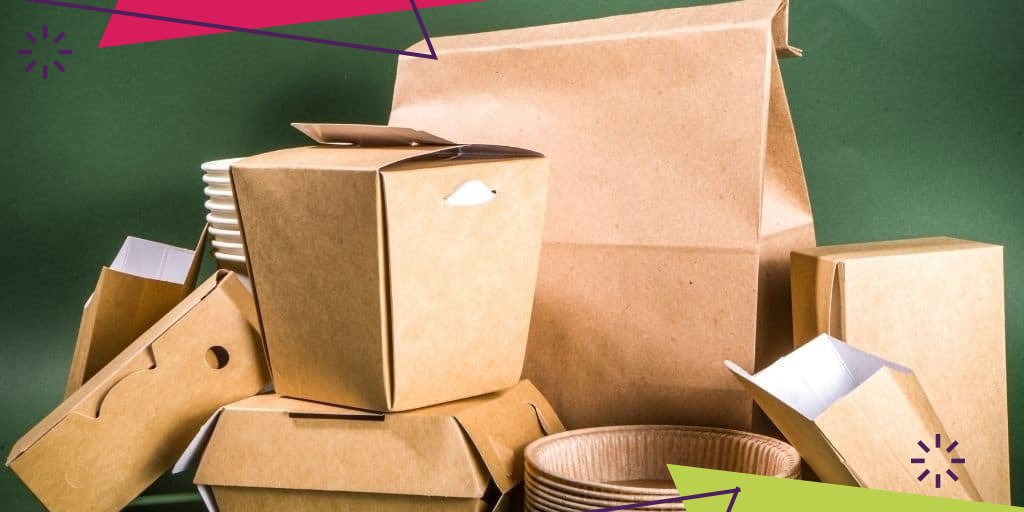
4. Make Your Existing Packaging Work Better
You don’t always need more expensive packaging to improve the delivery experience.
Sometimes, you simply need to use your existing packaging more effectively.
Organize the bag so that:
- Hot food stays hot.
- Crispy food doesn’t become unnecessarily soggy.
- Drinks don’t spill.
- Sauces are easy to find.
- Different items don’t damage each other.
Customers may never know how much you spent on packaging, but they will notice whether their order arrives organized or messy.
5. Add a Message Instead of a Free Gift
If you want to make delivery feel more personal, you don’t necessarily need to add a free dessert or extra product to every order.
A simple message on the bag can be enough:
- “Your order is here. Now it’s time to relax.”
Or:
- “We hope the first bite is exactly what you needed.”
Or change the message based on the day.
It costs almost nothing, but it can make the delivery experience feel more human.
6. Reduce Waiting Time Inside the Restaurant
Sometimes the delivery problem isn’t actually caused by the driver.
It starts inside the restaurant.
If the driver arrives before the order is ready, valuable time is wasted.
Try to coordinate:
- Order time + preparation time + driver arrival time.
If an order takes around 20 minutes to prepare, there’s little benefit in having the driver arrive 15 minutes before it is ready.
Better coordination can reduce delivery times without hiring additional drivers.
7. Group Nearby Deliveries More Intelligently
If several orders are going to nearby areas, you may be able to organize deliveries more efficiently instead of treating every order as a completely separate journey.
The goal isn’t to overload drivers.
It’s to reduce unnecessary trips while maintaining reasonable delivery times.
This is where restaurant delivery management software and data can become useful.
Instead of relying entirely on intuition, restaurants can use actual delivery patterns to make better decisions.
8. Don’t Make Customers Call to Ask About Their Order
If customers constantly have to call your restaurant to find out where their food is, there’s probably a communication problem.
Give them the information before they need to ask.
A simple automated message such as:
“Your order has left the restaurant and is expected to arrive within 15 minutes.”
can save your team dozens of calls during peak hours.
At the same time, the customer feels that their order is being actively monitored.
9. Tell Customers About Delays Before They Complain
This is one of the most effective ways to improve the food delivery experience.
If your system shows that an order is likely to be delayed, don’t wait for the customer to complain.
Tell them.
For example:
“We’re sorry. We’re experiencing higher-than-usual demand right now. Your order will take approximately 10 additional minutes.”
The customer may not be happy about the delay, but they’ll be much more understanding when they know what’s happening and when to expect the order.
The surprise is often more frustrating than the delay itself.
10. Let Customers Choose Their Delivery Time
Not every customer needs their order as quickly as possible.
Some customers prefer to schedule their delivery.
You can offer options such as:
- Deliver Now
- Deliver in 30 Minutes
- Deliver at 9:00 PM
This can help restaurants spread demand instead of receiving a large number of orders at exactly the same time.
Better demand distribution can improve operations without adding more staff or drivers.
11. Use Offers to Reduce Delivery Costs Instead of Absorbing Them
If you want to increase orders in nearby areas, you don’t necessarily need to offer free delivery to everyone.
Create targeted offers during periods of lower demand.
For example:
Free delivery from 3 PM to 5 PM
instead of:
Free delivery all day.
This turns delivery promotions into a way to increase demand during slower periods rather than creating an additional cost throughout the entire day.
12. Make Delivery Fees Transparent
Don’t let customers reach the final checkout step before discovering unexpected delivery charges.
Price transparency matters.
Clearly show:
Food cost + Delivery fee + Any additional fees
before the customer confirms the order.
When customers understand the total cost upfront, they’re less likely to abandon the order because of an unexpected charge.
13. Turn Complaints Into Data
If customers complain about delivery, don’t simply solve each complaint individually.
Look for patterns.
If most complaints are about:
Late orders
the problem may be operational.
If customers complain about:
Cold food
the issue could be preparation, packaging, or driver waiting time.
If customers frequently report:
Spilled drinks
you may need to improve how beverages are secured.
Every complaint can become useful data for improving your restaurant delivery service.
14. Make Unboxing Part of Your Marketing
Customers don’t only remember the taste of their food.
They also remember how it arrived.
A well-organized bag, neatly arranged products, easy-to-find sauces, napkins in the right place, and a small message can make the order feel more professional.
These details don’t necessarily require a large budget.
They simply require attention to the customer journey.
15. Ask One Simple Question After Delivery
Don’t send customers a long survey.
Ask one question:
“How was your delivery today? Rate it from 1 to 5.”
If the rating is low, you can investigate the problem.
If it’s high, you can identify what’s working.
Over time, this gives you valuable data for continuously improving your restaurant delivery experience.
How Can You Improve Restaurant Delivery Without Increasing Costs?
The key is to improve your processes before increasing your resources.
Instead of immediately buying more vehicles, ask:
Are we using our existing drivers efficiently?
Instead of hiring more customer service staff, ask:
Can automated updates answer common customer questions?
Instead of offering bigger discounts, ask:
Can better communication improve the customer experience?
Instead of buying more expensive packaging, ask:
Are we using our current packaging correctly?
In many cases, the problem isn’t a lack of resources.
It’s how those resources are being used.
The Future of Restaurant Delivery in Saudi Arabia
As the restaurant industry in Saudi Arabia becomes more competitive, delivery will become an increasingly important part of the customer experience.
Restaurants that succeed won’t necessarily be the ones with the biggest delivery budgets.
They’ll be the ones that create a delivery experience customers can trust.
Accurate delivery estimates, real-time updates, efficient order preparation, smart packaging, better use of AI and data, and proactive communication can make a significant difference without dramatically increasing operating costs.
Final Thoughts
In 2027, customers won’t necessarily demand free delivery.
They will demand reliable delivery.
They want to know when their food will arrive, what is happening with their order, and whether the restaurant is taking responsibility for the experience.
So before spending more money on delivery, look at your current system.
Can you communicate better?
Can you prepare orders more efficiently?
Can you use your existing drivers more intelligently?
Can you predict delays before they happen?
Can you use technology to answer customers before they need to ask?
Because sometimes, the best way to improve restaurant delivery in Saudi Arabia isn’t to spend more.
It’s to waste less.